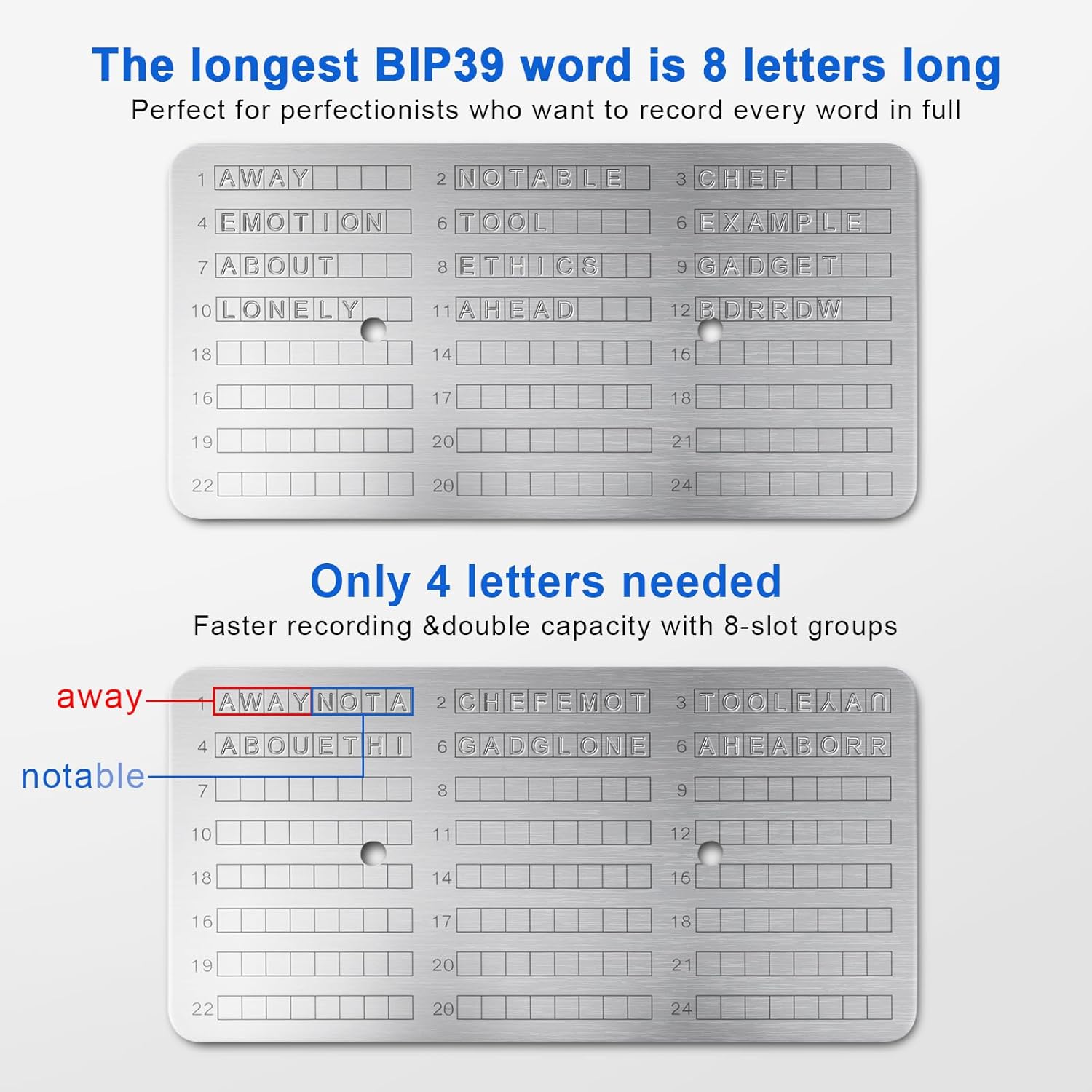
The box includes a framed Bitcoin coin, two stainless seed plates, eight tamper seals, a practice plate, a stamp positioner, and a full A–Z stamp set with screws and a screwdriver. The practice plate is great for getting a feel for spacing and pressure before stamping your real seed.
The kit is well laid out, everything is organized, and the instructions make it easy to stamp your words onto the metal. As a package, it’s complete and beginner-friendly.
But here’s the problem: the metal is advertised as “premium stainless steel,” and after digging a bit, it turns out to be 304 stainless, not 316.
304 is fine for general corrosion resistance, but it does not hold up well in salt air, humidity, or harsher environments. If you live near the coast, store your wallet in a basement, or want this to survive for decades, 304 isn’t the right material.
For long-term seed storage, you really want 316 stainless steel or titanium. This is your last physical line of defense after your hardware wallet, encryption, and multi-sig. The material choice matters.
The kit itself is very complete and nicely put together, so if you still use it:
• store each plate in different locations
• test your stamping technique on the practice plate
• periodically check the stored plates for early corrosion or moisture issues
Overall, a nice presentation and an innovative layout, but 304 stainless is a deal-breaker for serious long-term crypto storage.







Report